
Last updated September 25, 2026
How to Hire a ADU Contractor in Torrance: A Step-by-Step Guide
Most Torrance homeowners assume the biggest risk in an ADU project is construction quality. In our experience across 900+ projects since 2015, the real danger sits earlier: the gap between whoever draws your permit set and whoever builds from it. When those are separate contracts, no single party is responsible when Torrance Development Services rejects a detail, the builder says “the drawings were wrong,” and the designer says “the builder deviated from plan.” That gap costs homeowners $15,000 to $40,000 in corrections, delays, and change orders. This guide-and our more guides & resources-shows you how to hire an ADU contractor in Torrance who eliminates that gap before the first shovel hits the ground.
Quick Answer
To hire an ADU contractor in Torrance, verify they hold a valid B-General or design-build license with no bond lapses or judgment liens on their CSLB record; confirm they deliver a fixed-price permit set (not a design allowance) before construction; and demand a single contract covering both design and build so one party is responsible for permit corrections. In Torrance, where Development Services enforces the 2019 California ADU standards plus local hillside and coastal overlay rules, the designer-versus-builder blame gap is the leading cause of budget overruns.
Table of Contents
- The Three License Types and What Each Can Legally Promise in Torrance
- How to Read a California CSLB License History Page for Torrance-Relevant Flags
- The Contract Clauses That Close the Designer-Builder Blame Gap
- Why a Fixed-Price Permit Set Predicts Final Cost Accuracy
- Reference Check Questions Specific to ADU Projects
- What Torrance ADU Projects Actually Cost in 2025-2026
- Navigating Torrance Permits and Inspections
- When Prefab or Modular Makes Sense for Torrance Lots
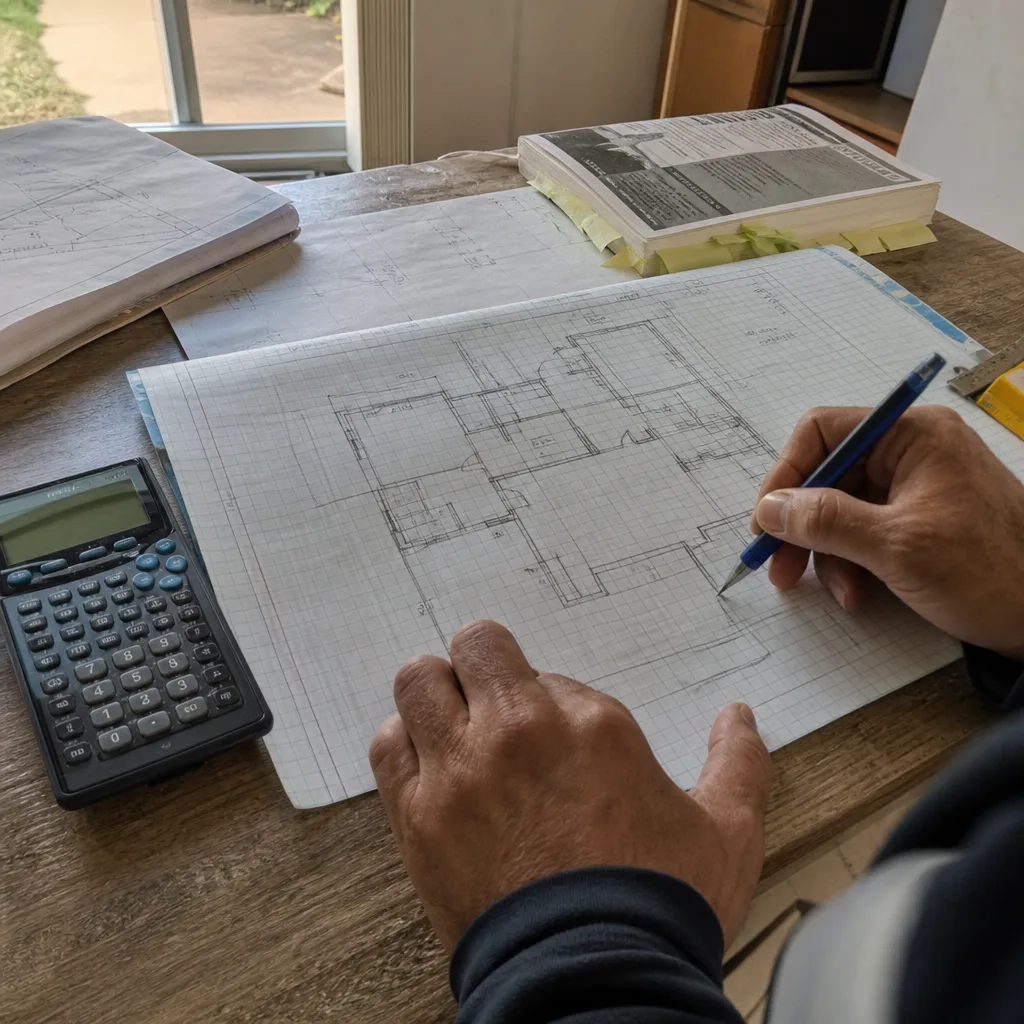
The Three License Types and What Each Can Legally Promise in Torrance
California law draws sharp lines around who can do what on an ADU project. Understanding these lines protects you from contracts that cannot legally be fulfilled.
B-General Building Contractor
A B-General license holder can supervise an entire ADU project, including subcontracting specialty trades (electrical, plumbing, HVAC). They cannot, however, design the structure unless they also employ or contract a licensed architect or engineer for the permit set. Many Torrance homeowners discover this limitation mid-project when their B-General hands them a set of rough sketches and says “you’ll need to get these engineered.” That is not a permit set. That is a delay waiting to happen.
Key question to ask: “Will your contract include the stamped permit set, or do I contract that separately?” If separately, you are creating the blame gap this guide warns against.
C-Listed Specialty Contractor
C-class licenses (C-36 Plumbing, C-10 Electrical, C-20 HVAC, etc.) are limited to their trade. A C-36 cannot legally contract to build your ADU. Yet we see Torrance homeowners sign “project management” agreements with specialty contractors who then subcontract everything else, including design. This structure violates CSLB rules and voids your recourse if the project fails. If your candidate mentions “we handle everything” but holds only a C-class license, that is a red flag requiring documentation of who holds the B-General or design-build authority.
Design-Build Entity
A true design-build studio, like Ellery ADU Studio Torrance, employs or contracts both design professionals (architects, structural engineers) and construction management under a single entity with a single license umbrella. One contract. One written price. One party responsible when Torrance Development Services asks for a correction. This is the structure California’s ADU laws were built to accommodate, and it is the structure that eliminates the gap.
In Torrance specifically, the Hillside Ordinance and Coastal Zone overlays add layers to standard ADU rules. A designer who does not build may not know how Torrance applies these overlays in practice. A builder who does not design may not anticipate the structural implications until the permit is already rejected. Only a design-build entity has incentive to get both right the first time.
How to Read a California CSLB License History Page for Torrance-Relevant Flags
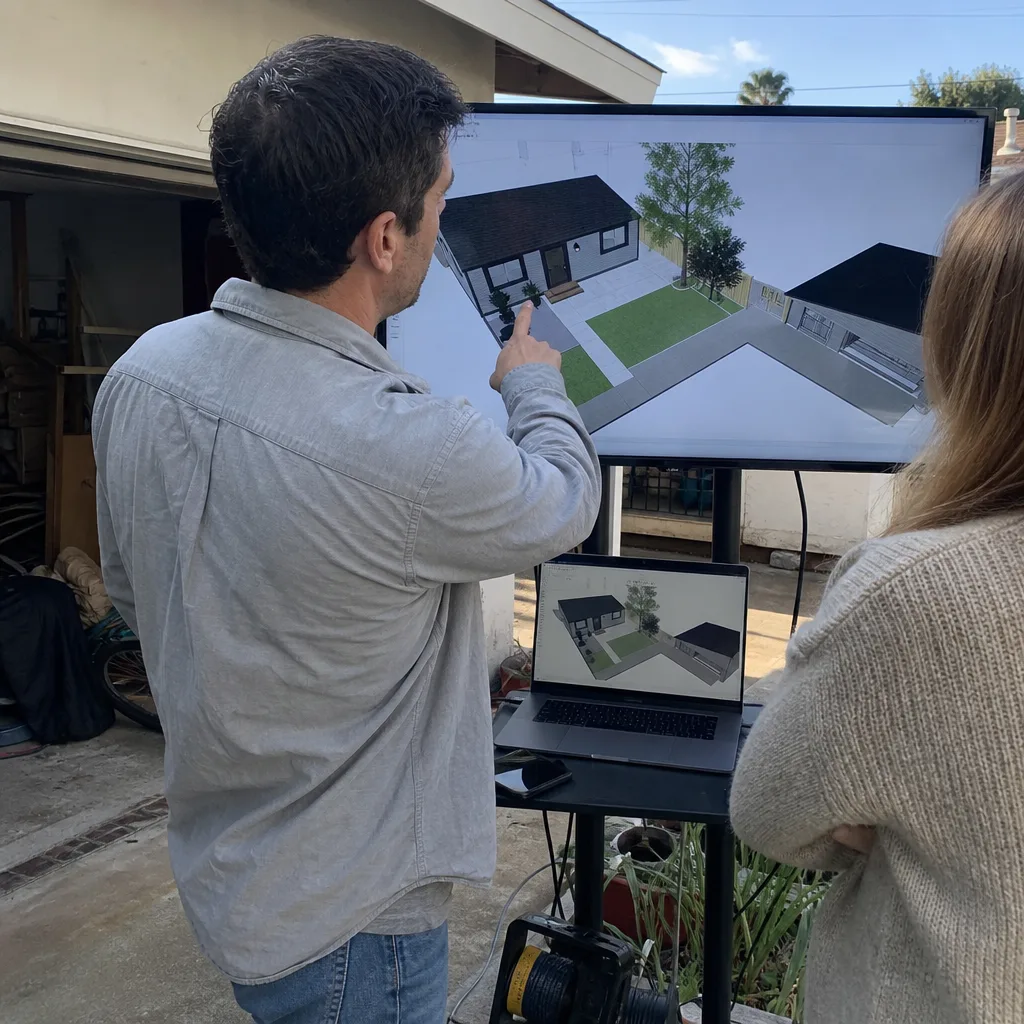
Every contractor in California has a public license record at cslb.ca.gov. Reading it correctly takes five minutes and prevents months of regret.
Step-by-Step CSLB Check
- Verify the license number matches the business name exactly. Some Torrance-area contractors operate under multiple DBA names with one license; others present a license that belongs to a different entity. Cross-check the CSLB “Business Name” field against the contract you are asked to sign.
- Check “Bond History” for lapses. A bond lapse means the contractor operated without the required $25,000 surety bond. Even a one-day gap invalidates permit applications filed during that window. Look for continuous coverage, especially around 2020-2022 when pandemic-related lapses were common.
- Review “Judgment Liens” and “Arbitration Awards.” These indicate past disputes that resulted in legal findings against the contractor. One judgment lien does not disqualify, but a pattern of three or more suggests systemic contract or quality problems.
- Confirm “Workers’ Compensation” status. If the license shows “Exempt” but the contractor employs anyone (including day laborers), that is a violation. On an ADU project in Torrance, uninsured worker injuries can become the homeowner’s liability through California’s broad workers’ comp statutes.
- Check “License Status” and “Effective Date.” An “Active” status with an effective date matching the original issue date is ideal. A recent reactivation after suspension requires explanation.
Torrance-specific note: Contractors who work across Los Angeles County often maintain multiple city business licenses. A valid CSLB license is necessary but not sufficient; ask whether they have pulled permits in Torrance specifically within the last 24 months. Torrance Development Services has its own submittal portal and inspection scheduling system, and familiarity with these workflows saves 2-4 weeks on typical projects.
The Contract Clauses That Close the Designer-Builder Blame Gap
The contract is where the blame gap lives or dies. These are the clauses we require in every ADU Design & Permitting in Torrance project, and the language you should demand if they are absent.
Clause 1: Single Point of Responsibility
Language to demand: “Contractor shall be solely responsible for the completeness and accuracy of the permit set, and for all construction performed pursuant thereto. No dispute between Contractor’s design personnel and construction personnel shall delay the project or increase the Contract Price.”
Without this clause, a permit correction becomes your problem to arbitrate between two vendors who each blame the other.
Clause 2: Fixed Scope, Fixed Price
Language to demand: “The Contract Price includes all design, permitting, and construction necessary to achieve a Certificate of Occupancy for the ADU described in Exhibit A. No additional charges shall be assessed for permit corrections, plan revisions, or code compliance updates enacted after contract date.”
This is the Haven Standard, Clause 1, that governs every project at Ellery ADU Studio Torrance: a written price before any work starts. The words “call for a quote” do not appear in our contracts or on our site because they cannot coexist with this clause.
Clause 3: Permit Correction Responsibility
Language to demand: “Contractor shall correct, at no additional cost, any permit comments or rejection notices issued by the Authority Having Jurisdiction (AHJ), including revisions to structural, MEP, or energy calculations.”
Torrance Development Services issues correction letters with 10-30 comments on typical ADU submittals. Someone must pay to address them. This clause assigns that cost with certainty.
Clause 4: Documented Photo Record
Language to demand: “Contractor shall provide dated, geotagged photographs of all concealed conditions, structural connections, and MEP rough-in, delivered to Owner within 48 hours of each site visit.”
On a recent Garage Conversion ADU in Torrance project in the Southwood neighborhood, our photo record revealed that the existing slab was 3.5 inches thick, below the 4-inch minimum for conversion without supplemental reinforcement. The client saw the evidence, understood the foundation line item in their fixed price, and approved the scope change before concrete was poured. No surprise. No dispute.
Clause 5: Written Warranty with Defined Remedy
Language to demand: “Contractor warrants that the completed ADU conforms to the permitted drawings and applicable codes. If non-conformance is discovered within 365 days of Certificate of Occupancy, Contractor shall remedy at no cost within 30 days of written notice.”
This is the 365-Day Done Right Promise. It is not a feeling. It is a clause, in writing, before the project starts.
Why a Fixed-Price Permit Set Predicts Final Cost Accuracy
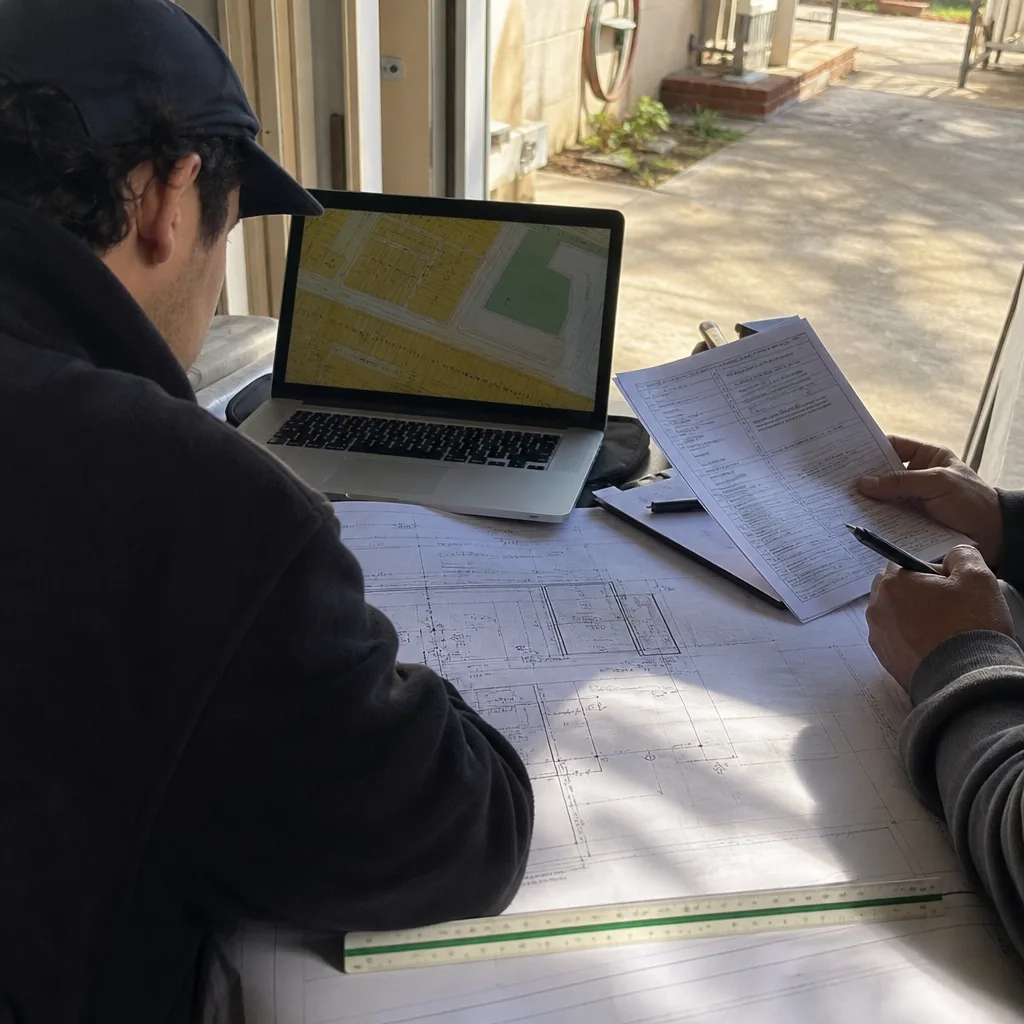
The single most predictive indicator of whether your Torrance ADU will finish on budget is not the construction estimate. It is the permit set pricing structure.
The Design Allowance Trap
Many B-General contractors bid ADU projects with a “design allowance” of $8,000-$15,000 for the permit set. This appears to control costs. It does the opposite. The allowance creates a conflict: the designer (often subcontracted by the builder) is incentivized to minimize effort to fit the allowance, while the builder is incentivized to blame the resulting permit set for any construction problem. When Torrance Development Services rejects a detail, the builder points to the designer’s “incomplete” work, the designer points to the allowance’s inadequacy, and the homeowner pays for redesign plus construction delay.
We have reviewed competitor estimates for Torrance homeowners where the design allowance was exhausted before the first permit submittal, leaving the homeowner to fund three rounds of corrections at $3,500 per round.
The Fixed-Price Permit Set Advantage
A fixed-price permit set means the design-build entity has priced the complete documentation required for permit approval and construction, including:
- Site plan with Torrance-specific setback calculations
- Floor plans, elevations, and sections
- Structural calculations (often required in Torrance’s seismic design category)
- Title 24 energy compliance documentation
- Green building compliance (CALGreen)
- Stormwater management plan (relevant for many Torrance lots with impervious surface limits)
When the permit set is fixed-price, the entity has incentive to get it right the first time. Their profit depends on efficiency, not on charging you for their mistakes. At New Detached ADU in Torrance projects we have delivered in the Walteria and Hollywood Riviera areas, the fixed-price permit set has correlated with final construction costs within 3% of original contract price, versus 15-25% variance on projects with design allowances.
How to Verify Fixed-Price Status
Ask for the permit set as a separate line item with a defined deliverable: “Complete permit-ready drawing set, stamped by California-licensed architect or engineer, suitable for submittal to Torrance Development Services.” If the response is “we’ll figure that out during design,” you have an allowance, not a fixed price.
Reference Check Questions Specific to ADU Projects
Generic reference checks (“Were they on time? Did they clean up?”) miss the failure modes that actually derail ADU projects. Use these questions instead.
Question 1: “Tell me about your last Torrance permit correction letter. How many comments, and how were they resolved?”
A competent ADU contractor in Torrance should answer with specifics: “We had 14 comments on a garage conversion last March. Twelve were clerical (dimension callouts, note clarifications). Two required structural detail additions. We revised and resubmitted in 8 days, permit issued 12 days after that.” An evasive or vague answer suggests they either do not track this metric or have problematic patterns.
Question 2: “Was your final cost within 5% of the original contract price? If not, what changed?”
Some change is legitimate: you upgraded finishes, you added scope. But if the reference describes “unexpected” foundation costs, “discovered” code requirements, or “permit delays” that triggered price increases, you are hearing the designer-builder gap in action.
Question 3: “Did you receive a documented photo record during construction? How did you use it?”
The photo record is not for nostalgia. It is evidence. References who describe using photos to verify insulation placement, confirm rebar spacing, or share progress with out-of-town family members are describing a transparent process. References who received no photos, or only a final album, are describing opacity.
Question 4: “If something was not built to the drawings, what happened?”
This tests the warranty clause in practice. A reference who says “they came back and fixed it, no argument” is describing a contractor with single-point responsibility. A reference who says “we’re still negotiating” or “we had to hire someone else” is describing the blame gap.
Question 5: “Would you hire them for your next ADU?”
This is the ultimate filter. Homeowners who have been through an ADU project once are highly informed consumers. Their willingness to repeat the experience is more predictive than any star rating.
What Torrance ADU Projects Actually Cost in 2025-2026
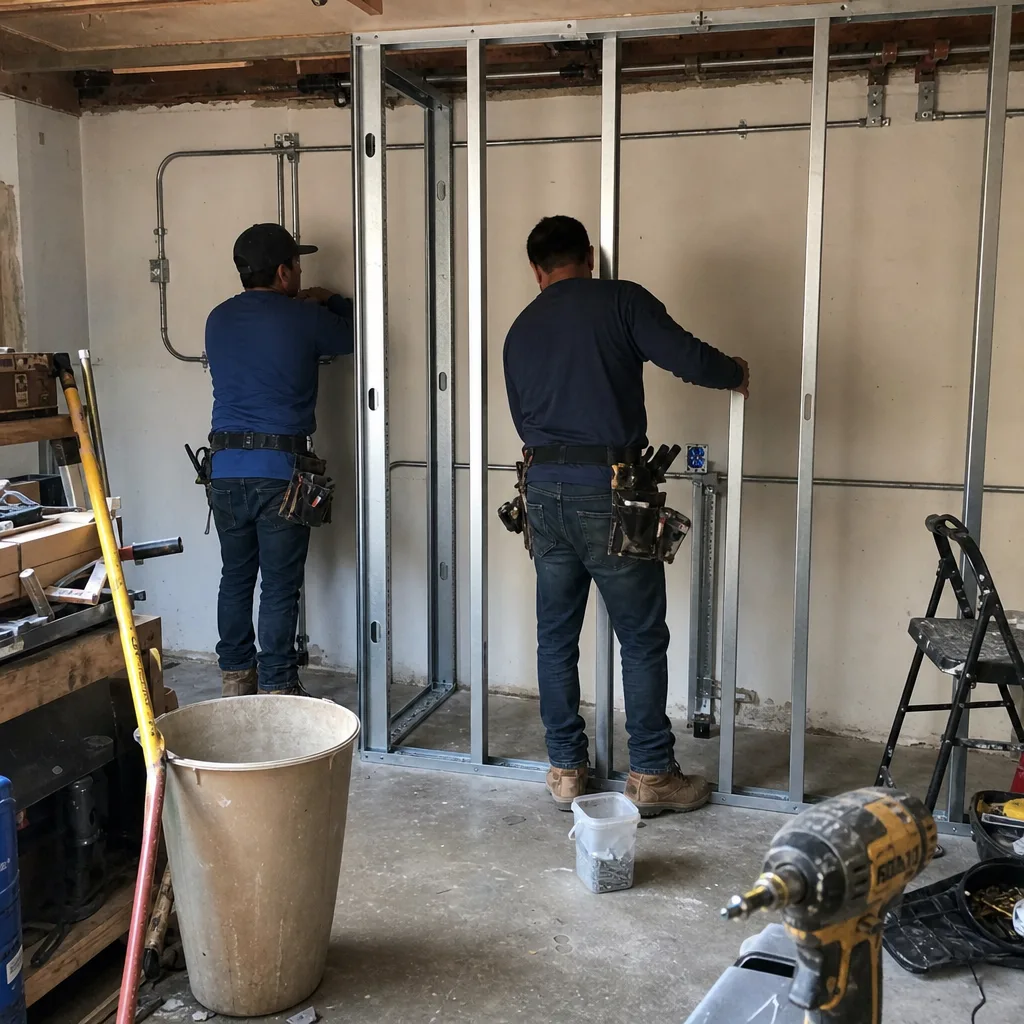
Naming dollar ranges on the page is not marketing. It is the minimum respect owed to a homeowner making a six-figure decision. These ranges reflect our direct experience in Torrance; your project may vary based on site conditions, finishes, and current material costs.
| ADU Type | Typical All-In Range (Design Through Final Inspection) | Key Cost Drivers in Torrance |
|---|---|---|
| Garage Conversion ADU | $145,000 - $225,000 | Existing slab condition, electrical service capacity, hillside/soft-story requirements |
| Junior ADU (Interior Conversion) | $85,000 - $140,000 | Separate entrance requirements, kitchen/bath rough-in proximity, parking impact |
| New Detached ADU (1 bed / 1 bath, 500-600 sq ft) | $220,000 - $320,000 | Foundation type, utility trenching length, coastal zone setbacks |
| New Detached ADU (2 bed / 1 bath, 750-850 sq ft) | $285,000 - $420,000 | Structural system, roof complexity, energy storage requirements |
| Site Prep & Utilities (if not included above) | $25,000 - $75,000 | Sewer lateral condition, electrical panel upgrade, grading on sloped lots |
These ranges include the permit set, all city fees, construction, and our documented photo record. They do not include optional upgrades like solar, battery storage, or premium finishes. Under Haven Standard Clause 1, your written quote specifies exactly what is included before any work begins.
Torrance-specific cost note: Lots in the coastal zone (west of Hawthorne Boulevard in some areas, west of Prospect Avenue in others) may require California Coastal Commission review for new detached ADUs over certain heights. This adds 6-12 weeks and $5,000-$12,000 in documentation costs. A contractor unfamiliar with Torrance’s coastal boundary maps may not flag this until after contract signing.
Navigating Torrance Permits and Inspections
Torrance Development Services operates under the 2019 California ADU laws (AB 68, SB 13) with local amendments. Understanding this interplay prevents permit rejection.
Torrance-Specific Requirements
- Setbacks: Torrance allows 4-foot side and rear setbacks for detached ADUs under 800 sq ft, but enforces stricter measurements in the Hillside Ordinance areas (generally north of Pacific Coast Highway and east of Crenshaw Boulevard). Your contractor must verify your lot’s overlay status before finalizing footprint.
- Height limits: 16 feet for detached ADUs, but 18 feet with a pitched roof meeting certain slope requirements. This matters for second-story garage conversions and two-story detached units.
- Parking replacement: Torrance does not require replacement parking for garage conversions, but does require that the converted space meet fire separation standards (typically 1-hour rated assembly between ADU and remaining garage).
- Utility connections: Torrance allows “piggyback” electrical service for ADUs under certain ampacities, but requires separate water meters for rental ADUs. Your contractor should specify which applies and include the meter cost in the fixed price if required.
The Inspection Sequence
Torrance uses a standard phased inspection schedule: foundation/under-slab, rough framing, rough MEP, insulation, drywall, final. Missing any phase requires re-inspection fees and delays. A design-build entity coordinates these phases internally; a split designer-builder arrangement often results in scheduling gaps when the builder blames the designer for incomplete documentation needed for rough inspection.
In the Old Torrance neighborhood, we have encountered older sewer laterals that fail video inspection and must be replaced before final. Our fixed-price contracts include this contingency when video inspection reveals it; design-only contracts typically exclude it, leaving the homeowner with a $4,000-$8,000 surprise.
When Prefab or Modular Makes Sense for Torrance Lots
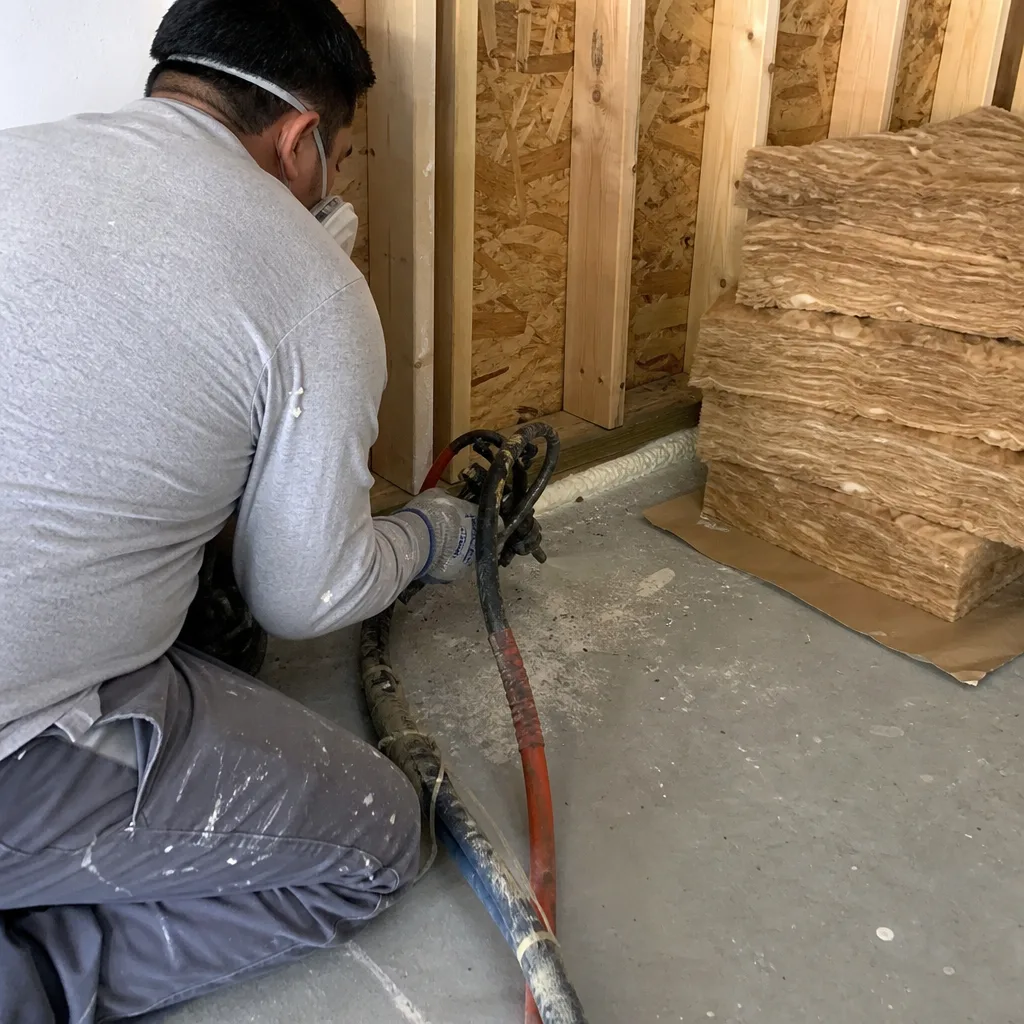
Prefab and modular ADU systems can compress construction schedules by 30-50%, but they require a contractor with brand fluency and site coordination experience. Ellery ADU Studio Torrance specifies and coordinates systems from Mighty Buildings, Boxabl, Plant Prefab, and Tuff Shed, among others, within our single-contract model.
Site Conditions That Favor Prefab
- Tight access: Lots in the Southwood or West Torrance areas with narrow driveways or overhead power lines may limit crane placement for large modules. Smaller panelized systems (Plant Prefab) or unitized systems that crane in sections (Mighty Buildings) may fit where a full module cannot.
- Coastal exposure: Factory-applied finishes from brands like Mighty Buildings (composite exteriors) or James Hardie (fiber-cement cladding) resist salt air better than site-applied stucco in Torrance’s marine climate.
- Schedule pressure: If rental income or family occupancy has a hard deadline, prefab’s parallel factory production and site prep can deliver a Certificate of Occupancy in 4-6 months versus 8-14 months for stick-built.
Site Conditions That Disfavor Prefab
- Significant grading: Modular units require level, compacted foundations. Sloped lots in the Hillside Ordinance areas may need extensive retaining walls and fill, eroding the schedule advantage.
- Utility complexity: Long utility trench runs or required panel upgrades add site work that runs concurrently with, not in parallel to, factory production. The schedule advantage diminishes.
- Custom footprint needs: Standard module dimensions may not optimize your lot’s buildable area. A stick-built design can follow setback lines precisely; a module cannot.
The critical factor is not the brand but the contractor’s ability to coordinate factory delivery with Torrance’s permit and inspection timeline. A contractor who sells you a Boxabl unit but has never pulled a modular permit in Torrance may deliver a unit that sits on your driveway for eight weeks while permit corrections cycle. Our single-contract model includes factory liaison, site prep, crane scheduling, and final connection in one written price and one timeline.
Common Mistakes to Avoid
- Signing a design contract before a construction contract. This guarantees the blame gap. If your designer is not your builder, get both contracts reviewed together by an attorney who understands California construction law.
- Accepting “allowance” language for any major line item. Allowances are budget fiction. In Torrance’s current market, a $12,000 kitchen allowance might cover mid-grade finishes if ordered today, but not if the project delays six months. Fixed price or nothing.
- Verifying license status once, at hiring. CSLB records change. A contractor with clean history in January may have a bond lapse in June. Verify again before signing, and consider a final check before the first progress payment.
- Ignoring the Coastal Zone or Hillside Ordinance overlay. Torrance’s zoning maps are publicly available, but many homeowners rely on their contractor to flag these. A contractor who has not built in your specific neighborhood may not know to check.
- Asking generic reference questions. “Were you happy?” produces polite noise. “What did your permit correction letter say?” produces signal.
- Treating the permit set as a formality. In Torrance, the permit set is the binding document that governs inspections, appraisals, and resale value. A rushed or incomplete set creates problems that emerge years later.
- Selecting on price alone. The lowest bid often reflects the highest allowance fiction or the thinnest permit set. In ADU construction, the second-lowest bid with fixed-price documentation is typically the lowest actual cost.
When to Call a Professional
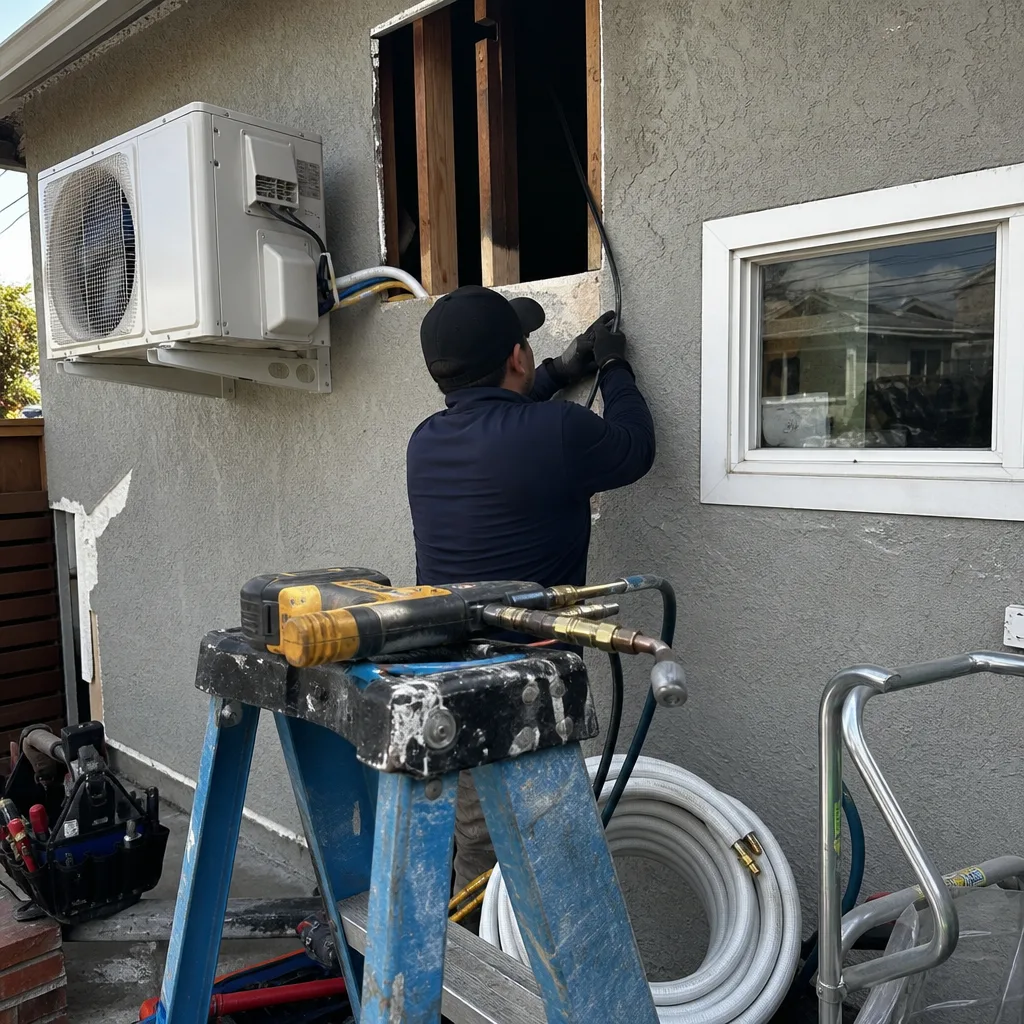
Call a professional when you have verified your lot qualifies for an ADU under Torrance’s zoning but before you sign any design or construction contract. The optimal sequence: confirm zoning eligibility, interview design-build entities with Torrance experience, review their CSLB records and reference answers, then select based on fixed-price transparency and single-point responsibility. Ellery ADU Studio Torrance offers free estimates in Torrance - call (424) 344-4822. We also provide a Free Second Opinion on any written estimate already in hand, with specific attention to allowance-to-fixed-price conversion and blame-gap risk in the contract language.
Frequently Asked Questions
Garage conversion ADUs in Torrance typically run $145,000-$225,000 all-in, from drawings through final inspection, while new detached ADUs range from $220,000-$420,000 depending on size and site conditions. These ranges assume a fixed-price contract with the permit set included; projects with design allowances often exceed these figures by 15-25% due to corrections and change orders. Call (424) 344-4822 for an exact quote on your lot - estimates are free.
Yes. Every ADU in Torrance requires a building permit from Torrance Development Services, plus trade permits for electrical, plumbing, and HVAC work. The permit set must be prepared by a California-licensed architect or engineer and must comply with both the 2019 California ADU standards and Torrance’s local amendments, including Hillside Ordinance and Coastal Zone overlays where applicable. A contractor who suggests “permitting later” or “getting it legalized” is proposing illegal construction that will block your Certificate of Occupancy and future sale.
From contract signing to Certificate of Occupancy, a typical Torrance ADU takes 8-14 months for stick-built construction and 4-8 months for prefab or modular systems. Permit processing at Torrance Development Services currently runs 8-12 weeks for complete submittals, with each correction cycle adding 2-4 weeks. Design-build contracts with fixed-price permit sets minimize correction cycles; split designer-builder arrangements often extend permit time by 50-100%.
Under a properly written fixed-price contract with no allowance fiction, the price should not change unless you request scope additions. This is Haven Standard Clause 5 (No Surprises): the scope is locked at signing, with no door-side upsells or scope creep. If your contract contains allowances, “estimated” line items, or clauses permitting price adjustment for “unforeseen conditions” without defined limits, the price will likely increase. Demand written fixed pricing before any work begins.
Ellery ADU Studio Torrance pulls all permits as part of our single-contract design-build service. The permit applications are prepared from our permit set, submitted through Torrance Development Services’ portal, and managed through approval and inspection scheduling. You receive copies of all permits and correction letters, but you do not interact with the city directly unless you choose to. This is part of closing the designer-builder gap: if we prepared the set, we answer for it with the city.
Yes, if your property meets Torrance’s zoning requirements: the garage must be on a lot with an existing single-family or multi-family dwelling, the conversion must meet fire separation standards, and the resulting ADU must comply with size limits (generally 50% of existing dwelling size or 1,000 sq ft, whichever is less). Torrance does not require replacement parking for garage conversions, which distinguishes it from some neighboring cities. A site-specific analysis confirms whether your garage slab, electrical service, and roof structure are suitable without major modification. Call (424) 344-4822 to schedule that analysis - estimates are free.
The Bottom Line
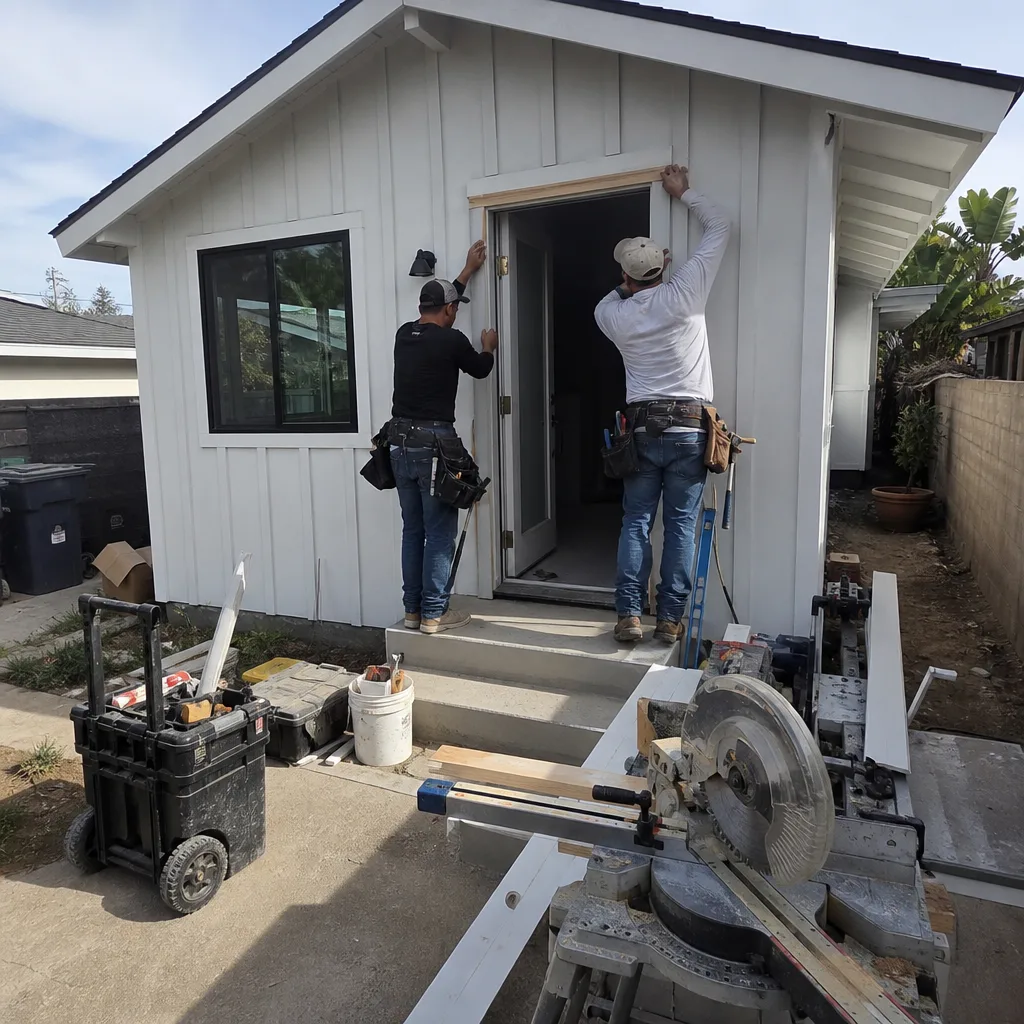
Hiring an ADU contractor in Torrance is not about finding the lowest bid or the fastest timeline. It is about eliminating the structural risk that destroys budgets and relationships: the gap between design and construction responsibility. Verify license type and CSLB history. Demand fixed-price permit sets, not allowances. Insist on contract language that assigns permit correction costs to a single party. Ask reference questions that test actual ADU experience in Torrance, not generic satisfaction. The contractor who meets these standards is not merely cheaper or faster - they are the only contractor who can promise, in writing, what your project will cost and who will fix it if something is wrong.
Written by Nadia Ellery, Owner at Ellery ADU Studio Torrance, serving Torrance since 2015.